Spectrophotometer | Konica Minolta
CM-26dG Spectrophotometer
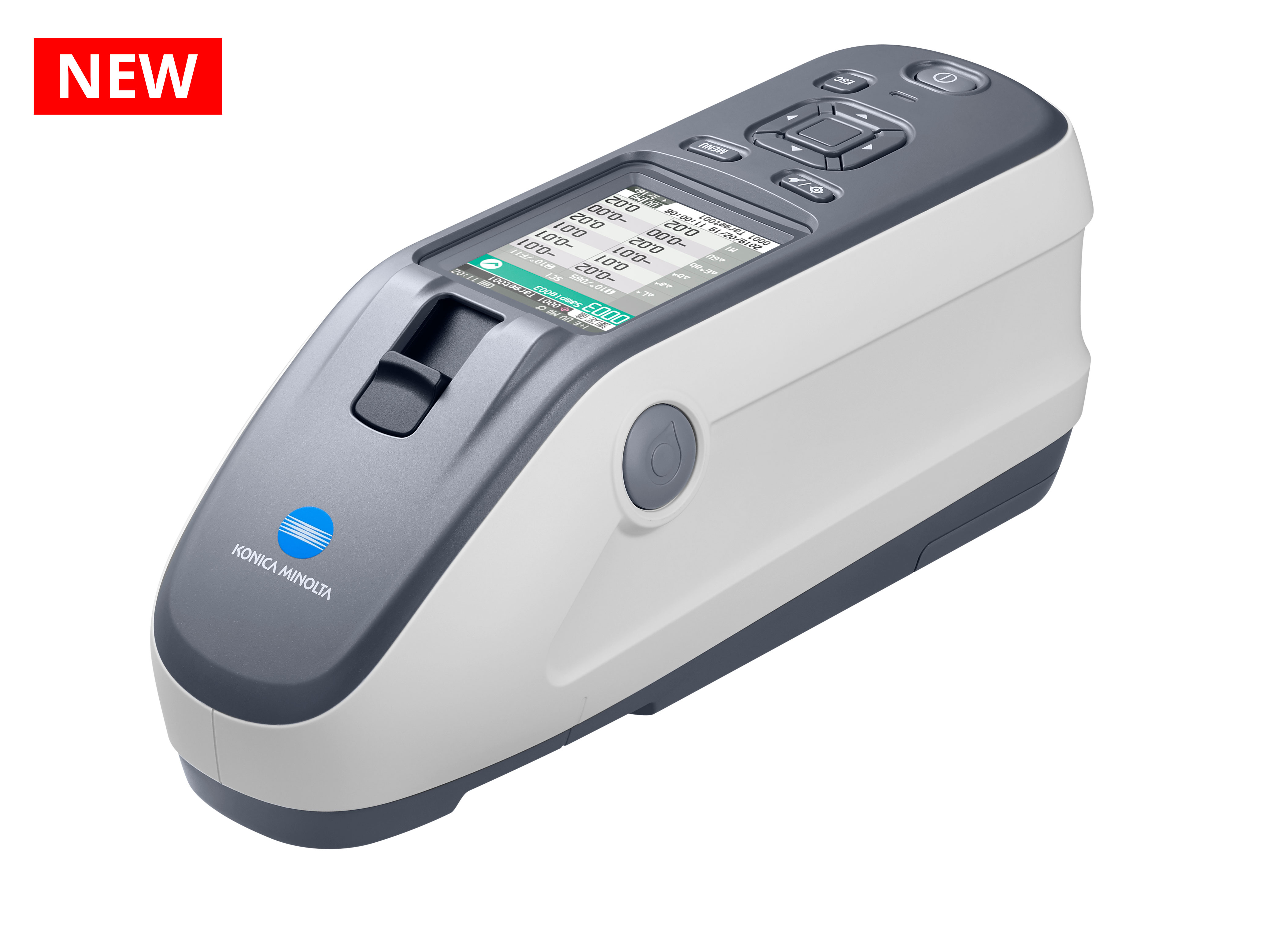
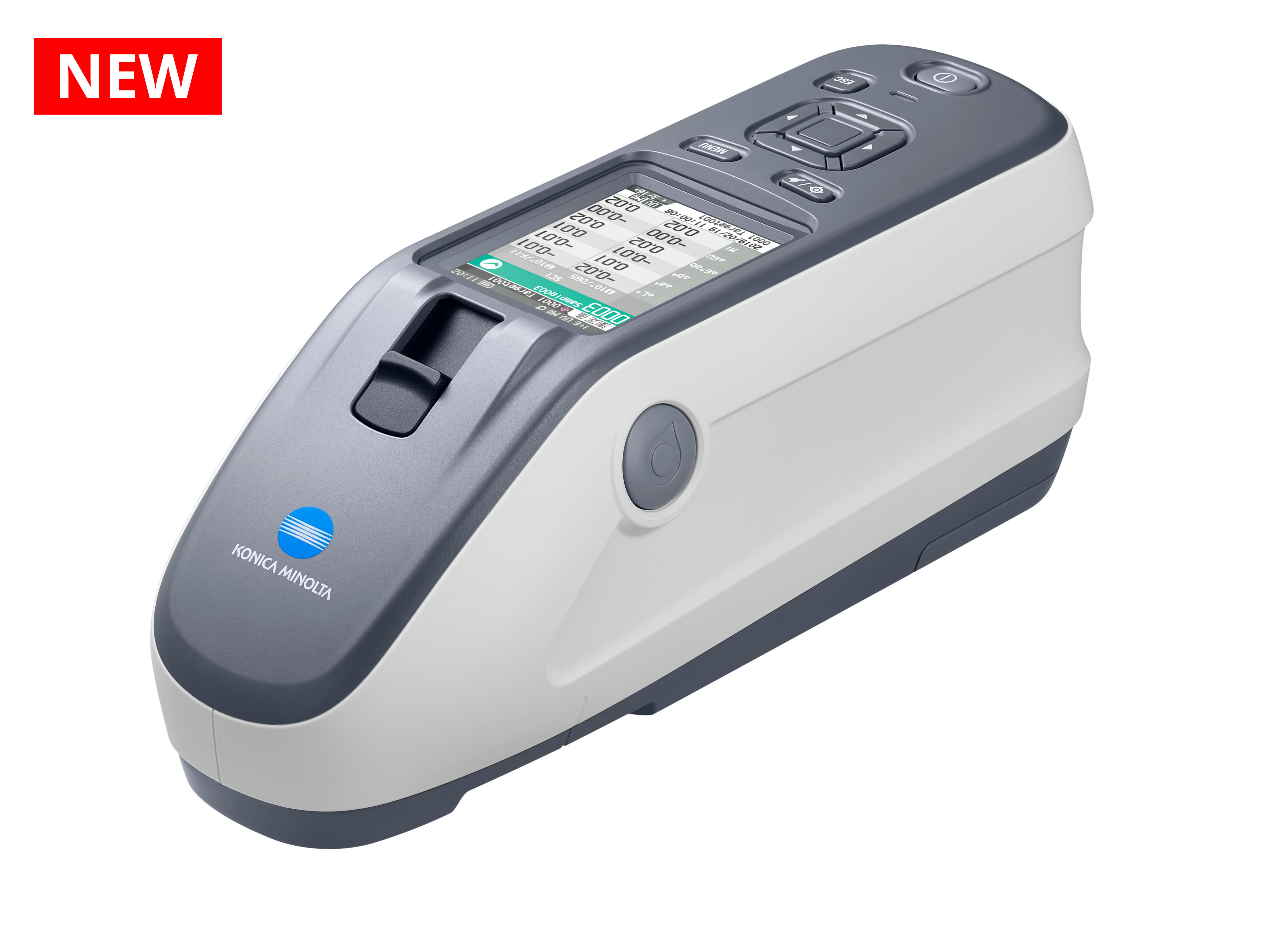
The Konica Minolta CM-26dG is a flagship portable spectrophotometer that combines high-precision d/8° diffuse illumination color measurement with simultaneous 60° specular gloss measurement in a single compact device. As the top model in Konica Minolta's next-generation CM-26d series, the CM-26dG delivers industry-leading inter-instrument agreement (ΔE*ab 0.12 average on BCRA tiles), ensuring consistent color data across multiple instruments and production sites. The CM-26dG spectrophotometer features a 36-pixel silicon photodiode array sensor, pulsed xenon lamp illumination, and supports both SCI (specular component included) and SCE (specular component excluded) measurement modes. With its large 2.7-inch color LCD touchscreen, Bluetooth 4.0 wireless connectivity, and USB interface, the CM-26dG offers seamless integration into modern color quality control workflows. The instrument stores up to 1,000 target data sets and 30,000 sample measurements internally, making it ideal for production floor use without constant PC connection. The CM-26dG is fully compatible with Konica Minolta's SpectraMagic NX color data management software for advanced analysis, reporting, and SPC.
About the Konica Minolta CM-26dG Spectrophotometer
The Konica Minolta CM-26dG is a flagship portable spectrophotometer that combines high-precision d/8° diffuse illumination color measurement with simultaneous 60° specular gloss measurement in a single compact device. As the top model in Konica Minolta's next-generation CM-26d series, the CM-26dG delivers industry-leading inter-instrument agreement (ΔE*ab 0.12 average on BCRA tiles), ensuring consistent color data across multiple instruments and production sites. The CM-26dG spectrophotometer features a 36-pixel silicon photodiode array sensor, pulsed xenon lamp illumination, and supports both SCI (specular component included) and SCE (specular component excluded) measurement modes. With its large 2.7-inch color LCD touchscreen, Bluetooth 4.0 wireless connectivity, and USB interface, the CM-26dG offers seamless integration into modern color quality control workflows. The instrument stores up to 1,000 target data sets and 30,000 sample measurements internally, making it ideal for production floor use without constant PC connection. The CM-26dG is fully compatible with Konica Minolta's SpectraMagic NX color data management software for advanced analysis, reporting, and SPC.
Features
- Simultaneous color (d/8°) and 60° gloss measurement
- Excellent inter-instrument agreement (ΔE*ab 0.12 avg on BCRA tiles)
- Bluetooth and USB connectivity
- Large 2.7" color LCD touchscreen
- Horizontal and vertical orientation
- 8mm and 3mm measurement areas
- Stores up to 1,000 target data and 30,000 sample data
- Compatible with SpectraMagic NX software
Specifications
| Optical Geometry | d/8° (diffuse illumination, 8° directional observation) per ISO 7724/2, CIE No. 15, ASTM E1164 |
|---|---|
| Integrating Sphere Diameter | 52 mm with Spectralon® coating (>96% reflectance) |
| Sensor | 36-pixel silicon photodiode array with diffraction grating |
| Spectral Range | 360 nm to 740 nm |
| Spectral Resolution | 10 nm (half bandwidth) |
| Measurement Range | 0 to 175% reflectance |
| Light Source | Pulsed xenon lamp × 2 (with UV adjustment for fluorescent samples) |
| Measurement Area (MAV) | Φ8 mm illumination / Φ4 mm measurement |
| Measurement Area (SAV) | Φ3 mm illumination / Φ2 mm measurement |
| Observer Angles | 2° (CIE 1931) and 10° (CIE 1964) |
| Illuminants | D65, A, C, F2 (Cool White), F7 (Daylight Fluorescent), F11 (TL84), F12 (Ultralume) |
| Color Spaces | L*a*b*, L*C*h°, ΔE*ab, ΔE*cmc, ΔE*2000, CIE XYZ, Yxy |
| Measurement Modes | SCI (specular included) / SCE (specular excluded) / simultaneous SCI+SCE |
| Gloss Sensor | 60° specular gloss (ASTM D523, ISO 2813) |
| Gloss Range | 0 to 200 GU (gloss units) |
| Repeatability (Color) | ΔE*ab ≤ 0.03 (standard deviation on white tile, 30 measurements) |
| Repeatability (Gloss) | Standard deviation ≤ 0.2 GU (on 60 GU tile) |
| Inter-Instrument Agreement | ΔE*ab ≤ 0.12 (average on 12 BCRA tiles) |
| Display | 2.7-inch color LCD touchscreen (TFT) |
| Data Memory | 1,000 target data + 30,000 sample data |
| Interface | USB 2.0 Full Speed, Bluetooth 4.0 (BLE + Classic) |
| Orientation | Horizontal and vertical (auto screen rotation) |
| Power | Rechargeable lithium-ion battery, AC adapter |
| Battery Life | Approximately 4,000 measurements per charge |
| Dimensions | 152 × 76 × 107 mm (W × D × H) |
| Weight | Approx. 670 g (with battery) |
| Operating Conditions | 5 to 40 °C, relative humidity 80% or less (no condensation) |
| Standards Compliance | ISO 7724, ASTM E1164, JIS Z 8722, DIN 5033, CIE No. 15 |
| Compatible Software | SpectraMagic NX, CM-CT1 (Color Trajectory) |
How the CM-26dG Spectrophotometer Works — Measurement Principle
The Konica Minolta CM-26dG spectrophotometer operates on the d/8° (diffuse/8-degree) optical geometry, which is the most widely used measurement geometry for industrial color measurement. In this configuration, light from two pulsed xenon lamps is directed into an integrating sphere, where it is diffusely scattered to illuminate the sample uniformly from all directions. The reflected light is then collected at an angle of 8 degrees from the normal to the sample surface, passing through a diffraction grating that separates the light into its component wavelengths across the visible spectrum (360 nm to 740 nm).
A 36-pixel silicon photodiode array simultaneously detects the spectral energy at each wavelength band, producing a complete spectral reflectance curve in a single measurement. This double-beam optical system continuously compensates for lamp intensity fluctuations, ensuring stable, repeatable measurements over time. The integrating sphere's internal Spectralon coating provides >96% reflectance across the visible spectrum, guaranteeing uniform diffuse illumination.
In addition to color measurement, the CM-26dG integrates a dedicated 60° gloss sensor that measures specular gloss simultaneously with color data. This dual measurement capability eliminates the need for a separate gloss meter and provides a complete surface appearance assessment in a single operation. The gloss measurement follows ASTM D523 and ISO 2813 standards for 60° specular gloss determination.
All spectral data is converted into colorimetric values (L*a*b*, L*C*h°, ΔE*ab, ΔE*cmc, ΔE*2000, XYZ, etc.) using CIE standard illuminants (D65, A, C, F2, F7, F11, F12) and CIE 1931 2° or CIE 1964 10° standard observers, providing accurate, standardized color communication across the entire supply chain.
Applications of the CM-26dG Spectrophotometer
The Konica Minolta CM-26dG spectrophotometer is used across a wide range of industries where precise color and gloss control is essential for product quality and brand consistency:
Automotive Industry
In automotive manufacturing, the CM-26dG is used to measure exterior body paint, interior trim components, plastic parts, leather seats, and metallic finishes. The simultaneous color and gloss measurement capability is particularly valuable for automotive coatings, where both color match and gloss level are critical quality parameters. The excellent inter-instrument agreement ensures consistent measurements between incoming inspection, production line, and final quality audit stations.
Paints and Coatings
Paint manufacturers and applicators use the CM-26dG for formulation verification, batch-to-batch consistency checks, and customer color matching. The instrument handles solid colors, metallic finishes, and special effect coatings with equal precision. SCI/SCE capability allows separate assessment of colorant properties and surface texture effects.
Plastics and Polymers
Injection molding, extrusion, and blow molding operations use the CM-26dG to monitor color consistency of plastic parts, masterbatch verification, and incoming raw material inspection. The compact measurement areas (Φ8mm and Φ3mm) accommodate small parts and curved surfaces.
Textiles and Apparel
Textile mills, dye houses, and garment manufacturers rely on the CM-26dG for shade sorting, color difference evaluation, and first-approval sample management. The portable design allows measurements directly on fabric rolls and finished garments.
Food and Consumer Goods
Food producers use color measurement to assess product appearance (baked goods, cereals, sauces, beverages), while consumer goods manufacturers apply the CM-26dG to ceramics, paper, printing inks, cosmetics packaging, and household products to maintain brand color standards.
Building Materials
The CM-26dG measures color and gloss of tiles, laminates, flooring, siding, roofing materials, and architectural coatings, helping manufacturers maintain consistency across large production volumes.
Q: What is the difference between CM-26dG, CM-26d, and CM-25d?
A: The CM-26dG is the flagship model that combines color measurement with 60° gloss measurement. The CM-26d offers the same color measurement capability without the integrated gloss sensor. The CM-25d is a simplified model with excellent color measurement performance at a more accessible price point. All three models share the same excellent inter-instrument agreement and user interface.
Q: What does d/8° geometry mean and why is it important?
A: d/8° geometry means the sample is illuminated diffusely (from all directions via an integrating sphere) and the reflected light is measured at 8 degrees from the normal. This geometry captures both the diffuse and specular reflectance components (SCI mode) or just the diffuse component (SCE mode), making it the most versatile geometry for measuring a wide variety of sample types.
Q: Can the CM-26dG measure metallic and pearlescent colors?
A: Yes, the CM-26dG can measure metallic and pearlescent coatings in SCI mode, which includes the specular component for complete color characterization. For multi-angle assessment of special effect finishes, consider the CM-512m3A multi-angle spectrophotometer.
Q: What software is compatible with the CM-26dG?
A: The CM-26dG is fully compatible with Konica Minolta's SpectraMagic NX color data management software, which provides advanced color analysis, pass/fail evaluation, SPC charts, and reporting. Data can also be exported to third-party color formulation and quality management systems via USB or Bluetooth connection.
Q: How often does the CM-26dG need calibration?
A: The CM-26dG includes a white calibration plate and should be calibrated before each use or at regular intervals depending on usage conditions. The instrument includes automatic calibration diagnostics to verify measurement accuracy. Konica Minolta recommends periodic factory calibration and certification through authorized service centers.
Q: What is the measurement area size?
A: The CM-26dG offers two measurement areas: Φ8mm (MAV - Medium Area View) for standard samples and Φ3mm (SAV - Small Area View) for small or curved samples. The user can switch between these apertures depending on the sample requirements.